
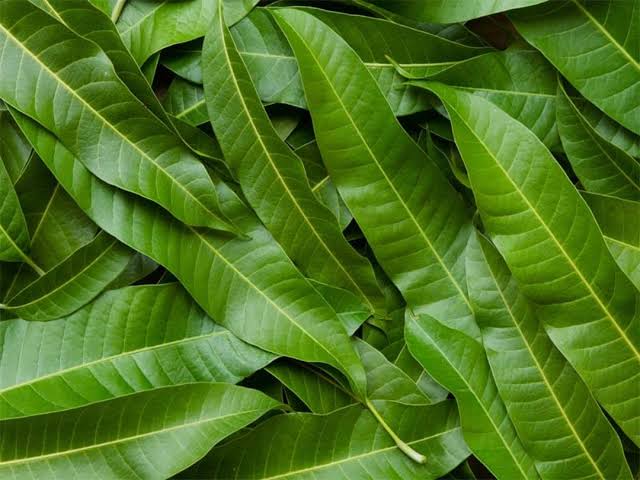
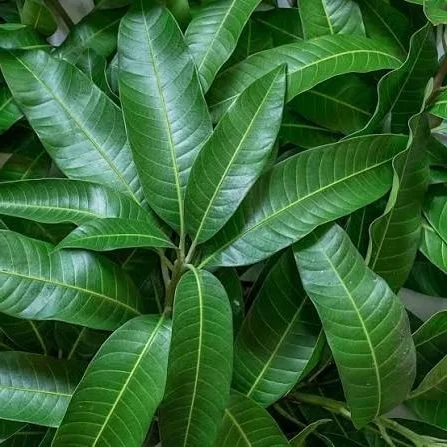
Mango leaves can be very interesting for natural dyeing and eco-printing, especially on silk, wool, and other protein fibres. The colour can range from yellow, beige, olive, tan, and greenish-brown, depending on leaf maturity, mordant, fibre, and process.
1. Mango-Leaf Eco-Print / Bundle Dye
Materials Needed
- Fresh mango leaves
- Silk or wool fabric
- Alum mordant
- Water
- Vinegar or mild acid
- Steamer / pot
Method
- Scour the fabric first to remove oils and finishes.
- Mordant with alum appropriate to your fibre.
- Soak fresh mango leaves for several hours.
- Arrange the leaves tightly on the damp fabric.
- Fold or roll the fabric tightly around a stick and tie firmly.
- Steam for 1–2 hours.
- Leave the bundle unopened for 12–24 hours for deeper transfer.
- Open, remove the leaves, rinse gently and dry in shade.
This can give you beautiful leaf silhouettes and veins, particularly on silk.
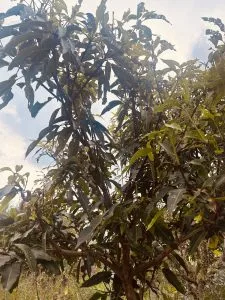
2. Mango-Leaf Dye Bath
For a More Uniform Colour
- Use roughly 100–200% fresh leaves based on the dry weight of fabric.
- Chop the leaves.
- Simmer in water for about 45-60 minutes.
- Strain the dye bath.
- Put your mordanted fabric into the bath.
- Heat gently for 45-60 minutes.
- Leave overnight if you want a deeper shade.
- Rinse and dry away from strong sunlight.
3. Experiment with Mordants
For your Spiritual Textile / sustainable cashmere concept, I would test several swatches:
| Treatment | Possible Result |
|---|---|
| Alum | Yellow / golden-beige |
| Iron after-bath | Olive / grey / green-brown |
| No mordant | Softer beige / tan |
| Alum + iron print | Stronger vein / detail contrast |
Important: Iron can make wool/cashmere harsh or weaken fibres if used excessively, so keep iron concentrations low and test first.
4. For Himalayan Cashmere
Mango leaves could be especially interesting for a “Himalayan Cashmere × Mango Leaf Eco-Print” concept. I would use small swatches first, because cashmere is delicate and excessive heat, alkaline conditions, or strong mordants can damage the fibre.