
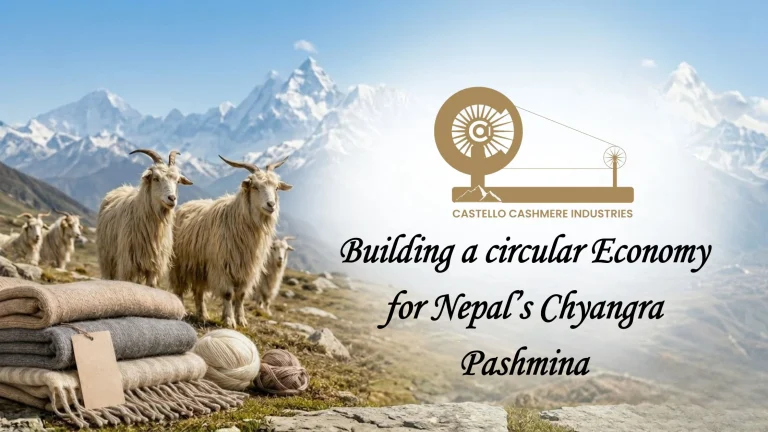
From Himalayan Pastures to Global Markets
Vision
To establish Nepal as a global leader in sustainable, ethical, and circular cashmere production by creating an integrated value chain based on Chyangra (Himalayan Goat) Pashmina, local craftsmanship, environmental stewardship, and community prosperity.
Core Circular Economy Principles For Chyangra Pashmina
Regenerative Raw Material Production
- Increase the population of Chyangra goats through sustainable breeding programs.
- Support Himalayan pastoral communities and traditional grazing systems.
- Promote biodiversity conservation and responsible land management.
- Ensure full traceability from farm to finished product.
Localized Value Addition
Instead of exporting raw fiber, Nepal should maximize domestic processing through:
- Fiber collection and grading centers.
- Washing and scouring units.
- Dehairing and fiber preparation facilities.
- Yarn spinning units.
- Banding and twisting units.
- Weaving, knitting, and garment manufacturing facilities.
This approach retains greater economic value within Nepal and creates rural and urban employment opportunities.
Natural and Low-Impact Processing
- Establish common facility centers for natural dyeing.
- Develop eco-friendly screen printing and block printing workshops.
- Promote low-water and low-chemical production methods.
- Encourage the use of renewable energy in processing units.
Zero-Waste Manufacturing in Chyangra Pashmina
- Utilize fiber waste for felt products, insulation materials, handicrafts, and home décor items.
- Recycle production scraps into new yarns and blended products.
- Implement waste segregation and circular production systems throughout the value chain.
Nepali Cashmere Brand Development
Build a globally recognized identity:
“Authentic Nepali Chyangra Pashmina – From the Himalayas.”
Learn more about our Cashmere and Castello Cashmere Industries
Key initiatives:
- Factory retail outlets.
- Dedicated stores in Thamel and major tourist destinations.
- Experience centers showcasing the complete production journey.
- International flagship stores and distribution partnerships.
Digital Transformation (B2B & B2C)
Develop a comprehensive digital platform that:
- Connects farmers, processors, manufacturers, exporters, and buyers.
- Promotes products made from verified Nepali fiber.
- Supports direct-to-consumer sales worldwide.
- Uses digital traceability and storytelling to highlight sustainability and artisan heritage.
Circular Skills and Knowledge Ecosystem
Establish a Cashmere Academy focused on:
- Chyangra farming and breeding.
- Fiber grading and quality control.
- Textile technology and innovation.
- Sustainable manufacturing.
- Product design and fashion.
- Digital marketing and international trade.
- Circular economy and ESG practices.
Sustainable Investment Framework
Mobilize impact investors, development partners, government agencies, and private sector stakeholders to support:
- Infrastructure development.
- Technology upgrades.
- Research and innovation.
- Community-based enterprises.
- Export promotion initiatives.
Expected Outcomes of Chyangra Pashmina
- Increased Chyangra population and raw material security.
- Higher incomes for Himalayan farming communities.
- Reduced export of unprocessed fiber.
- Greater domestic value addition.
- Creation of green jobs.
- Strengthened global reputation of Nepali Pashmina.
- Reduced environmental footprint.
- Establishment of Nepal as a leading circular cashmere economy.
Guiding Philosophy
“From Himalayan Goats to Global Luxury, every fiber should create value, preserve nature, empower communities, and reflect the spirit of Nepal.”
Hari Om Tat Sat.
Prakash Bolakhe Luitel (Aananda)
Castello Cashmere
Lomanthang Cashmere